

SUBMIT A QUESTION
REQUEST LITERATURE
How Do I Terminate VFD Cable?

OUR SOLUTION FOLLOW-UP QUESTION
HOW TO TERMINATE VFD CABLE
VFD cable should be terminated at both ends—at the VFD cabinet and the motor. This enables the shield to effectively function as a return path for stray currents.
For the most secure termination, a VFD system must have:
- Copper-Tape-Shielded Cable (flat 5-mil copper tape, helically applied with 50% overlap)
- Self-Terminating Connectors (one for each end)
- Termination Kits (one for each end)
Follow the steps below or download our detailed installation guide. Watch the ServiceDrive VFD Cable Termination video for a full demo on how to install the cable and connectors.
STEP 1: PREPARE THE COPPER TAPE SHIELD
Expose enough of the shielded core to join the cable to a self-terminating connector at the motor junction box or VFD enclosure.
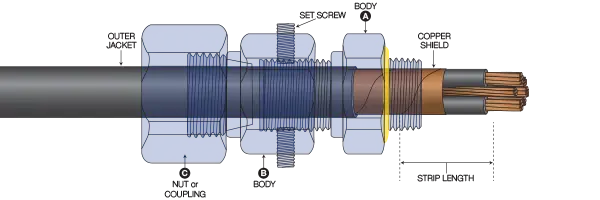
Refer to the installation guide for specific strip length.
STEP 2: INSTALL THE TERMINATION KIT
A termination kit is used to support the cable shield's return path for stray current. The kit consists of a flat-woven tinned copper braid, stainless steel spring clamp, and adhesive-backed copper tape.
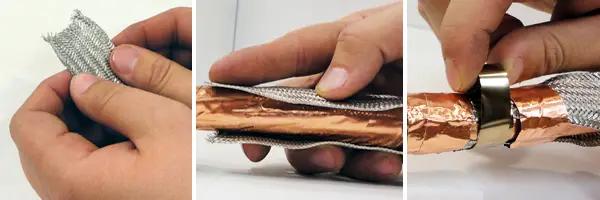
To install the termination kit:
- Flair the ends of the braid and place them on opposite sides of the cable parallel to one another.
- Apply two layers of copper tape over the braid.
- Wrap the spring clamp over the tape.
- Apply the remaining tape over this configuration.
STEP 3: INSTALL THE CONNECTORS
Self-terminating connectors are a cable gland that makes 360-degree contact with the cable shield when tightened. They should be used on both ends of the cable and are available for direct tray and armored cable applications.
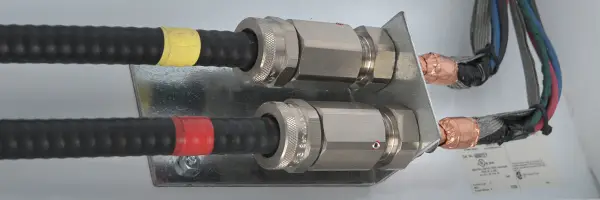
To install a connector:
- Attach it to a threaded NPT opening at the VFD or motor box.
- Push the cable (with termination kit attached) through the connector so that the exposed shield is inside the box and under the end of the connector where it attaches to the opening.
- Tighten the connector over the cable so that it makes 360-degree contact with the copper shield.
STEP 4: TERMINATE THE BRAID
Attach the end of the termination kit braid to earth-grounded bare metal on an enclosure wall or junction box with a brass bolt or flat plate with bolt.
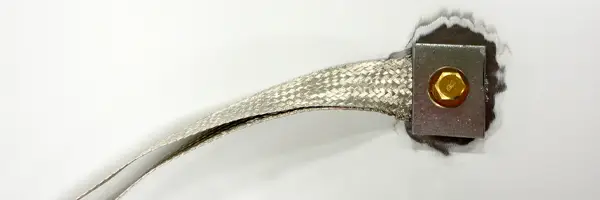
Following these guidelines will help prevent damage that leads to costly downtime and repairs—ensuring that your VFD system runs efficiently and safely for years to come.
Having a properly designed cable is an essential part of any variable frequency drive (VFD) system. Industry experts recommend that VFD thermoset cables have:
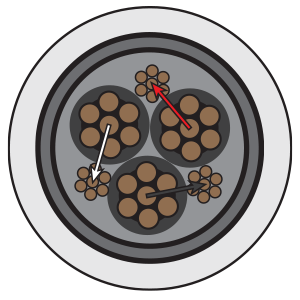
Three Symmetrical, Balanced Grounds.
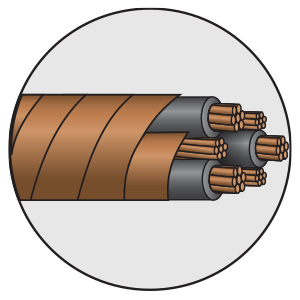
Proper Copper Tape Shielding
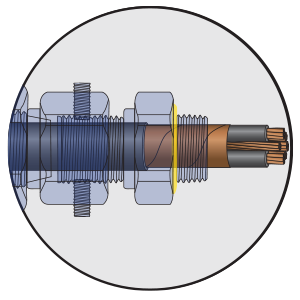
Proper Shield Termination
Each of these features are important and contribute to the overall safety and efficiency of a VFD system. However, without proper shield termination the benefits of VFD cable are lost.
WHY SHOULD I TERMINATE MY VFD CABLE?
The improper termination of VFD cable allows for uncontrolled stray currents to flow through the system. These stray currents can move through and damage the drive, motor, motor bearings, and even the cable itself, allowing electromagnetic interference (EMI) to escape and cause damage to nearby equipment.
PROPER TERMINATION PROTECTS FROM
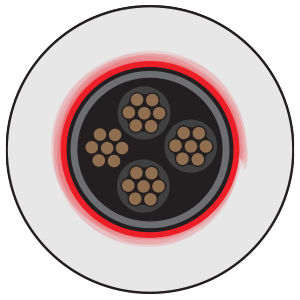

The source of this kind of damage can be difficult to diagnose and can cost millions in downtime. Implementing proper cable termination in a VFD system is an easy way to prevent these costs.
WHAT'S THE BEST WAY TO TERMINATE MY VFD CABLE?
In order to control stray currents and limit EMI, experts agree that VFD cable must be terminated at both ends—at the VFD cabinet and at the motor. When bonded properly at both ends, the shield creates a path of least resistance in the system and is able to return stray currents to the drive. This enables the shield to effectively minimize EMI.
For the most reliable termination, a VFD system should include three things: copper-tape shielded cable, self-terminating connectors (one for each end), and termination kits (one for each end).
COPPER TAPE SHIELD
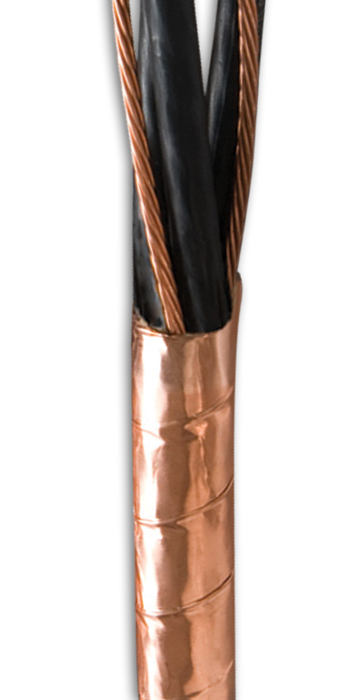
Research shows that flat 5-mil copper tape, helically applied with 50% overlap, gives the best coverage and performance. This type of shield provides 100% coverage even when the cable is bent. Additionally, the tape’s large surface area and the low impedance of copper provide an ideal return path for stray current.
SELF-TERMINATING CONNECTORS
VFD self-terminating connectors are a specialized type of cable gland that makes 360-degree contact with the cable shield when tightened. This connection creates a low impedance path for stray currents to follow, keeping them contained in the VFD cable, and away from surrounding equipment. The connectors should be used on both ends of a cable to prevent stray current from damaging the VFD or motor.
There are a number of different connector designs for different applications. Service Wire, for example, manufactures self-terminating connectors for tray as well as a connector for armored cable installations.
TERMINATION KITS
While connectors are effective at directing stray current away from sensitive equipment, it is recommended that a VFD termination kit is also used to reinforce the lower impedance return path. This is essential to extend the life of the motor and prevent motor bearing failure.
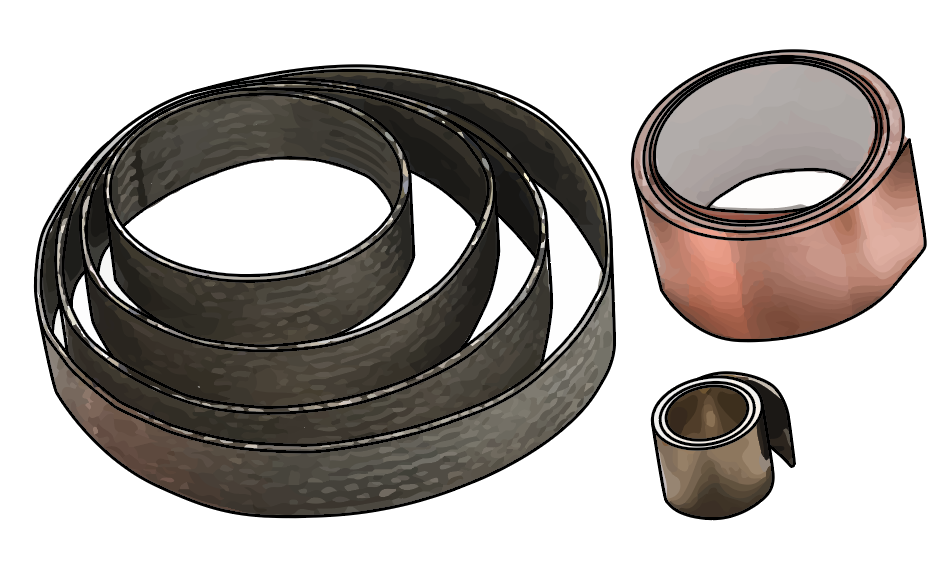
Service Wire’s termination kit consists of two flat-woven tinned copper braids, stainless steel spring clamp, and adhesive-backed copper tape. The braids are installed on opposite sides of the cable against the cable’s copper shield. Adhesive copper tape is wrapped around the braids to hold them in place against the shield, and the clamp is placed over the tape to further secure them.
This configuration is wrapped with more copper tape for additional support. The other ends of the braid are joined together and then terminated to earth-grounded bare metal—of an enclosure wall or motor junction box—with a brass bolt or flat plate with bolt (not included in the termination kit).
 Service Wire sets the standard. You've always been responsive to RFQs and knowledgable about wire and cable products.
You're always ahead of the curve of new technology. We've sold many of the ServiceDrive set ups. Best VFD cable kits on the market.
READY TO TERMINATE VFD CABLE?
Proper VFD cable termination is critical for ensuring the safety, efficiency, and longevity of a VFD system.
Without adequate shield termination, stray currents and EMI can cause significant damage to the motor, bearings, drive, nearby equipment, and even personnel, leading to costly downtime and repairs.
ServiceDRIVE® cables, connectors, and termination kits are the best solution on the market for keeping your VFDs running safely and reliably.
Download our detailed installation guide.
INSTALLATION GUIDES
SERVICEDRIVE®
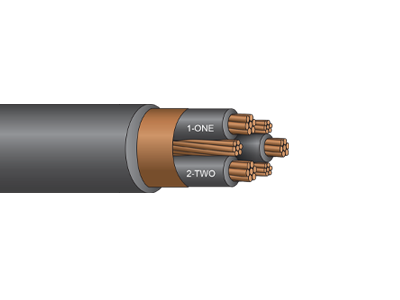
VFD Tray Cable
- RHW-2/PVC, Shielded
2,000 Volt Copper
AVAILABLE:
#14 AWG - 750 Kcmil
PVC, ServiceCPE®, or EnviroPLUS® Jacket
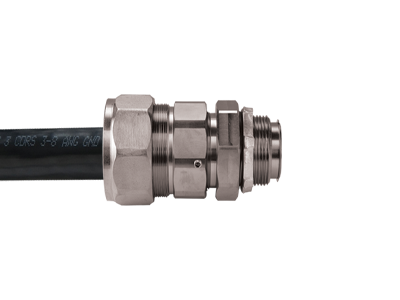
SERVICEDRIVE®
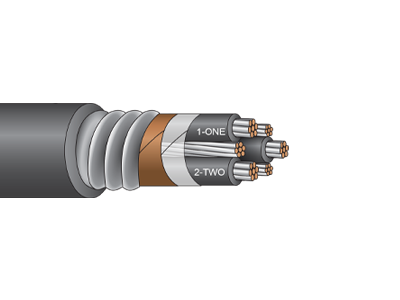
VFD Terminating Connector
- Direct Wiring (Tray)
2,000 Volt Copper
AVAILABLE:
#14 AWG - 750 Kcmil
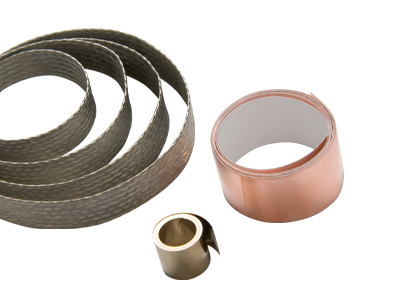
SERVICEDRIVE®
VFD Termination Kit
- Tray or MC Cable
600/1,000/2,000 Volt Copper
AVAILABLE:
#14 AWG - 750 Kcmil
Related CUSTOMER QUESTIONS
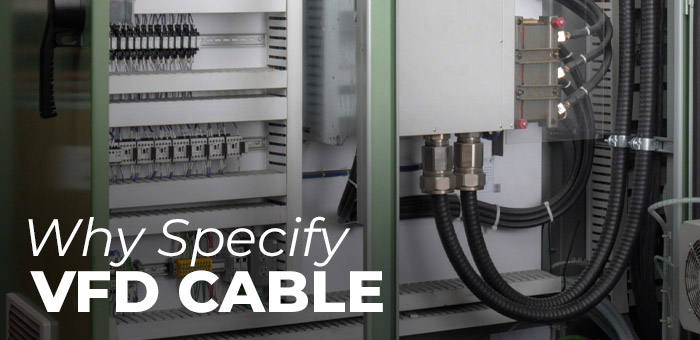
Why Specify Cable Systems for VFD Applications?
Selecting the wrong Variable Frequency Drive (VFD) cable system can lead to disasters like motor bearing failure, stray current, EMI, and cable failure. Learn how to choose the right system and avoid costly downtime, diagnosis & repair.
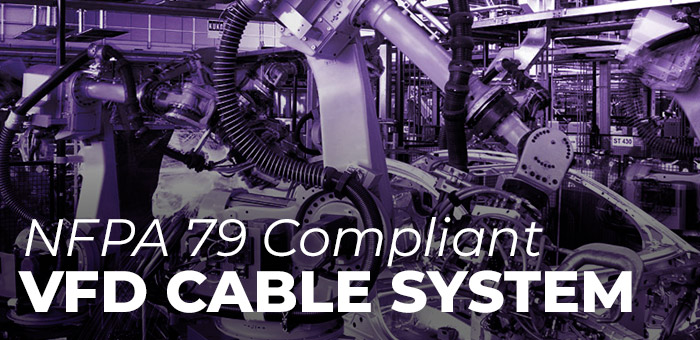
NFPA 79 Requirements: Are Your VFD Cables Compliant?
NFPA79 established specific requirements for VFD cable design to ensure effective and compliant cables. Learn how ServiceDrive® has always met these requirements.

What Are the Advantages of UL Dual Rated Tray Cable?
Dual rated tray cable is a great cost-alternative option that offers voltage flexibility. Discover the benefits of selecting 600V/1kV rated tray cable.