

Can Microgrids Save
an Aging Power Grid?

OUR SOLUTION FOLLOW-UP QUESTION
What Are Microgrids
& Why Are They Important?
A microgrid is a localized electrical system that generates, stores, and distributes power.
It improves reliability, supports renewable integration, and keeps power on during outages.
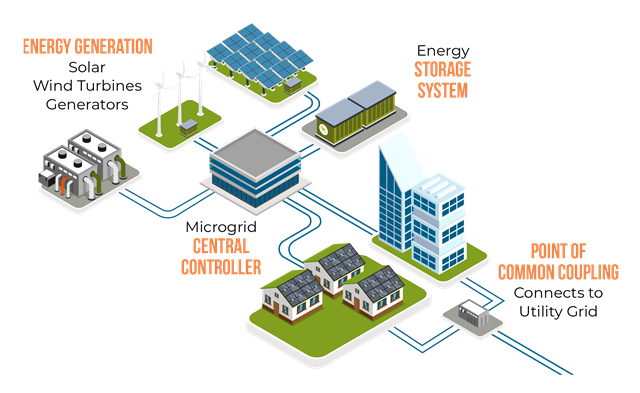
Microgrids connect to the grid at a single point of common coupling and run in grid-connected, islanded, or hybrid modes.
Service Wire supplies the cable that connects them, including RHW-2, USE-2, tray cable, and PV wire.
What Is a Microgrid?
Microgrids are autonomous electrical systems that generate, store, and distribute electricity to meet the needs of localized communities. Initially developed to improve system reliability, microgrids have also become essential infrastructure for modernizing the grid and integrating renewable energy. With electrical demand growing from data centers, electric vehicles, and industrial growth, it is predicted that the global microgrid market will double in five years.
How Do Microgrids Connect to the Electrical Grid?
Microgrids connect to the larger power system at a single point called the "point of common coupling." This interface allows the microgrid to operate in three distinct modes:
- Grid-Connected Mode: The microgrid generates power locally while staying synchronized with the utility grid. Excess power can flow to the grid; power can be drawn from the grid when needed.
- Islanded Mode: During grid outages or by choice, the microgrid disconnects and operates independently, serving loads with local generation and storage. This island operation maintains power supply even when the main grid fails.
- Hybrid Mode: The microgrid transitions between grid-connected and islanded operation, optimizing based on grid conditions and local needs.
Microgrid Types & Power Sources
Microgrids can be configured as AC (alternating current), DC (direct current), or hybrid systems combining both. The choice depends on generation sources, storage technology, and load requirements. Power sources vary widely: renewable sources like solar and wind, conventional generation like natural gas or diesel, connections to the utility grid, or hybrid combinations leveraging multiple sources. This flexibility enables microgrids to maximize efficiency based on current conditions and needs.
Essential Microgrid Components
Every microgrid requires interconnected components working together.
- Energy Generation systems: create usable electricity.
- Energy Storage systems: provide power buffering and stability.
- Microgrid Central Controller: optimizes power flow and balances loads.
- Point of Common Coupling: connects microgrid to the utility grid.
Key Benefits of Microgrids
Economic benefits include price stability, cost predictability, and reduced energy consumption through local optimization. Localized generation and storage reduce transmission losses, lowering overall system costs.
Reliability and resilience improvements are substantial. Microgrids maintain continuous power supply during grid outages, increasing system reliability through localized generation and storage. They also improve voltage stability and power quality.
Grid support and modernization represent long-term value. Microgrids enable renewable energy integration at the local level, reducing strain on centralized transmission. They provide the foundation for smart grid development and enable demand management services that help balance broader grid needs.
SUBMIT A QUESTION
FACT SHEET
 Service Wire always goes above and beyond to meet the requirements of the customer.
Compared to other manufacturers, Service Wire not only provided quality product but great service & support.
Cable Infrastructure for Microgrids
Reliable microgrid operation depends on robust electrical infrastructure connecting components. Low voltage cables (up to 2kV) distribute power from renewable sources and generation equipment to loads throughout the system. DC cables connect battery arrays, transformerless inverters, and hybrid loads—critical for energy storage integration. Single conductors (RHW-2, USE-2) provide general purpose and direct-burial rated power distribution, essential for underground microgrid runs. Tray cable provides power distribution through the microgrid installation. PV wire (up to 2kV) interconnects solar arrays to collection cables and inverters.
Building Microgrid Infrastructure
Microgrids represent the future of localized, resilient power systems. As grid modernization accelerates and renewable integration becomes central to energy strategy, microgrids enable communities and facilities to manage power more effectively.
Service Wire products provide the power backbone microgrid systems depend on—engineered for reliability, rated for diverse applications, and built for long-term performance.
Contact your Service Wire representative to discuss cable specifications for your microgrid project.
SERVICEPRO-X®
No Pulling Lubricant Required
(#6 AWG and Larger)
- XHHW-2 600V/1kV Copper
- USE-2 or RHW-2 600V/1kV Copper
- RHW-2 or RW90 1kV/2kV Copper
AVAILABLE:
#14 AWG - 1000 Kcmil
Tinned Conductors
VW-1 Rated
Wide Range of Colors
Silicone-Free
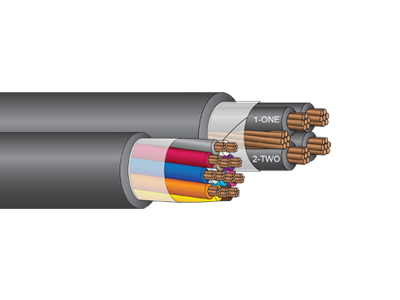
TRAY CABLE
TC-ER Rated
- XHHW-2 Inner Conductors
Colored, Numbered, or Striped Conductors
AVAILABLE:
Dual Rated 600V/1kV or 2kV
#14 AWG - 750 Kcmil
2-37 Conductors
Tinned or Non-Tinned
Shielded or Non-Shielded
PVC, ServiceCPE®, or EnviroPLUS® Jacket
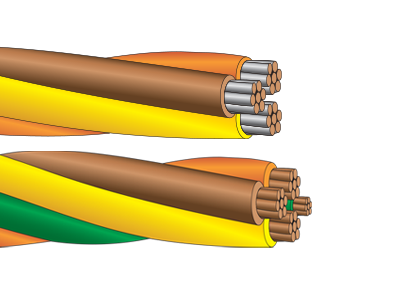
SERVICEPLEX®
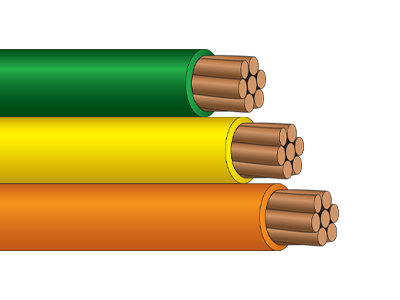
Prefab Twisted Single Conductors
- XHHW-2 Inner Conductors
600/1,000 Volt Copper
AVAILABLE:
#14 AWG - 750 Kcmil
2-7 Conductors
Built-In Grounds
Pre-Installed Pulling Heads
Wide Range of Colors
Silicone-Free
Related CUSTOMER QUESTIONS

Where Is Low Voltage Cable Used in EV Infrastructure?
Low voltage cables are used to connect the transformer for switching to the individual charging stations. But what factors should you consider before selecting cable?
THHN vs. XHHW-2: What's the Difference?
Thermoset XLPE insulation is superior to the thinner PVC insulation used in thermoplastic products (like THHN/THWN-2). Learn more about the differences between THHN and XHHW-2.
What Is the Best Cable for Overhead Power?
Twisted cable like ServicePlex is a cost-effective solution for overhead power distribution, delivering optimized ampacity, reduced derating, space savings, faster installation, and lower labor costs in demanding power applications. Learn how ServicePlex can simplify your installation.