

Should I Specify Copper or Aluminum Wire?

OUR SOLUTION FOLLOW-UP QUESTION
HOW TO SELECT CONDUCTOR TYPE
Understanding the key differences between copper and aluminum helps clarify which material best suits your application.
CONDUCTOR CHARACTERISTICS
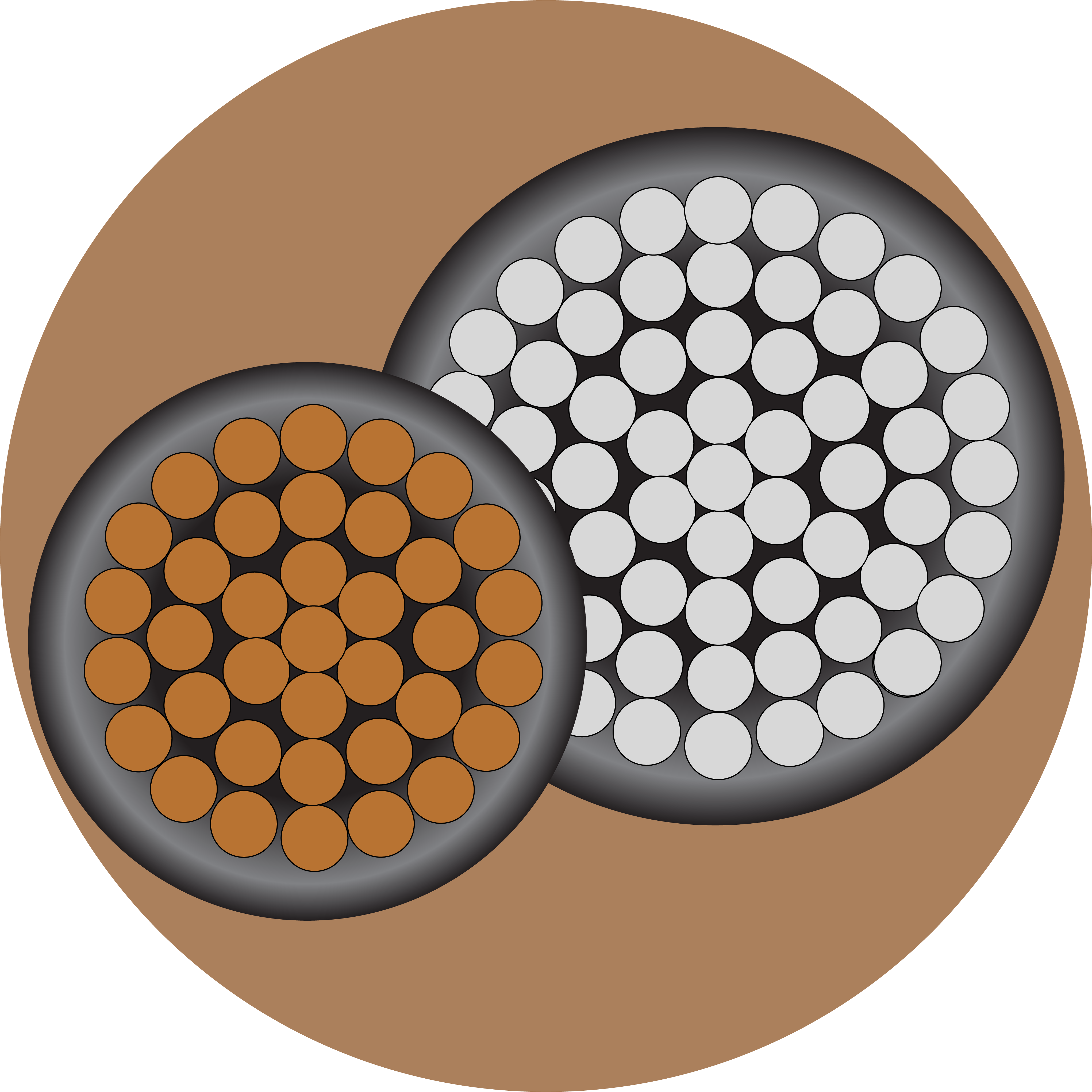
CONDUCTIVITY & SIZE: Copper is the industry benchmark for conductivity, delivering higher capacity in a more compact construction. Aluminum only has 61% of copper’s conductivity, requiring larger cable for the same electrical performance.

WEIGHT: Aluminum is lighter than copper but offers lower mechanical reliability and shorter service life.

STRENGTH: Copper has twice the tensile strength, allowing it to handle more pulling force. This makes it better in vibration-prone installations.

THERMAL PERFORMANCE: Aluminum expands 40% more than copper under temperature changes, causing loose connections and faults. Copper stays securely terminated and won’t loosen over time.

OXIDATION: Copper forms a conductive oxide layer that maintains electrical reliability over time without maintenance. Aluminum forms a non-conductive oxide layer that requires maintenance to prevent failure.

COST: Copper has a lower total cost of ownership because of its reliability and longer service life.
WHERE COPPER IS THE CLEAR CHOICE
- HIGH-STRESS APPLICATIONS: Copper’s mechanical characteristics make it advantageous in high-stress applications where superior fatigue resistance and stability under thermal cycling are critical. This includes transformers, motors, and generators.
- MOISTURE-PRONE CONDITIONS: Copper offers simpler long-term connection reliability with less stringent installation and maintenance requirements.
- CRITICAL CIRCUITS: Industrial systems where reliability is essential (manufacturing facilities, hospitals, data centers) specify copper. It is ideal for feeder, branch, and grounding systems.
The right choice for conductor material depends on electrical performance requirements, installation environment, mechanical stress conditions, and project scale. Understanding the technical differences ensures the right material is specified for long-term reliability and safety.
CONDUCTIVITY: COPPER VS. ALUMINUM
Copper serves as the benchmark for electrical conductivity at 100% IACS (International Annealed Copper Standard). It delivers higher current capacity in a more compact conductor size. This superior conductivity translates to lower resistance, reduced voltage drop, and less heat generation. By design, copper simplifies installation and reduces space requirements—improving system efficiency and reliability.
Aluminum provides 61% of copper's conductivity. To carry equivalent current with comparable resistance, aluminum requires approximately 60% greater cross-sectional area—about 25% larger diameter than copper.

- CABLE SIZE & INSULATION: Larger aluminium conductors require thicker insulation to maintain the same voltage rating, further increasing the overall cable diameter and weight.
- CONDUIT FILL: Aluminum's larger outside diameter (OD) means fewer conductors fit in the same conduit size, often requiring larger or additional conduit to meet NEC fill requirements.
- TERMINATION: Aluminum conductors require larger lugs, connectors, and termination spaces due to their increased size—impacting panel and junction box selection and potentially increasing equipment costs.
WEIGHT & COST CONSIDERATIONS
Copper is a heavier metal than aluminum, but its superior electrical properties allow for smaller conductor sizes that can partially offset the weight difference. Copper offers a lower total cost-of-ownership through higher mechanical durability, fewer connection-related issues, longer service life, and less maintenance.
Aluminum weighs around 70% less than copper and costs less per pound. However, the weight savings is closer to 50% when aluminum conductors are upsized to match copper’s ampacity. Even accounting for increased conductor size, aluminum can offer lower upfront material costs. This makes it attractive for large-scale installations where weight reduction is valuable such as overhead transmission and distribution lines.
MECHANICAL STRENGTH, RELIABILITY & DURABILITY
Copper forms a conductive oxide layer that maintains reliable electrical contact over time. It has approximately twice the tensile strength of electrical-grade aluminum and significantly higher fatigue endurance—meaning it can be bent, flexed, or vibrated repeatedly without developing cracks or breaking.
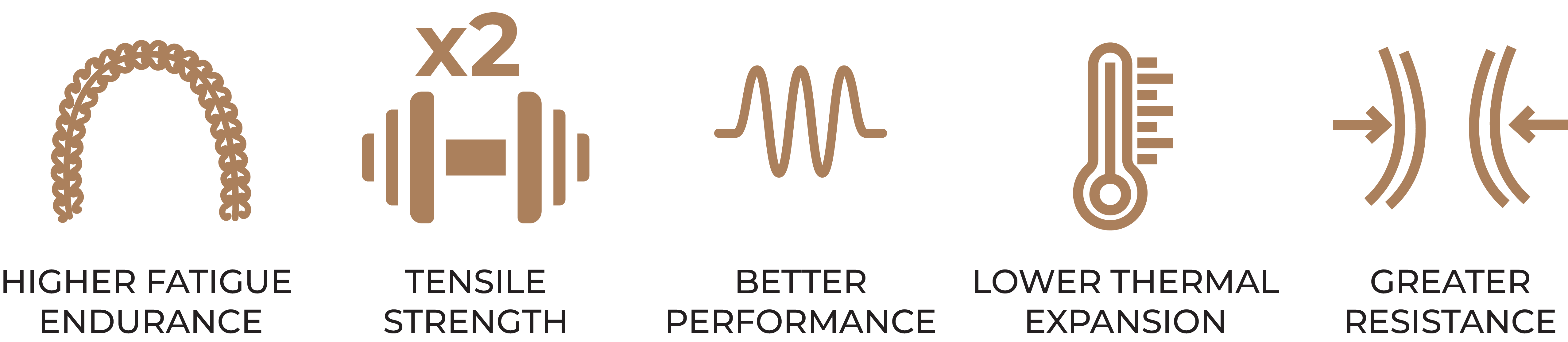
The repeated expansion and contraction of thermal cycling causes terminations to loosen and fail over time. Because copper is less affected than aluminum, it experiences less mechanical stress, reduced risk of loosening, and lower likelihood of developing hot spots or high-resistance connections.
This translates to better performance in vibration-prone environments, less thermal expansion, and greater resistance to conductor movement or failure.
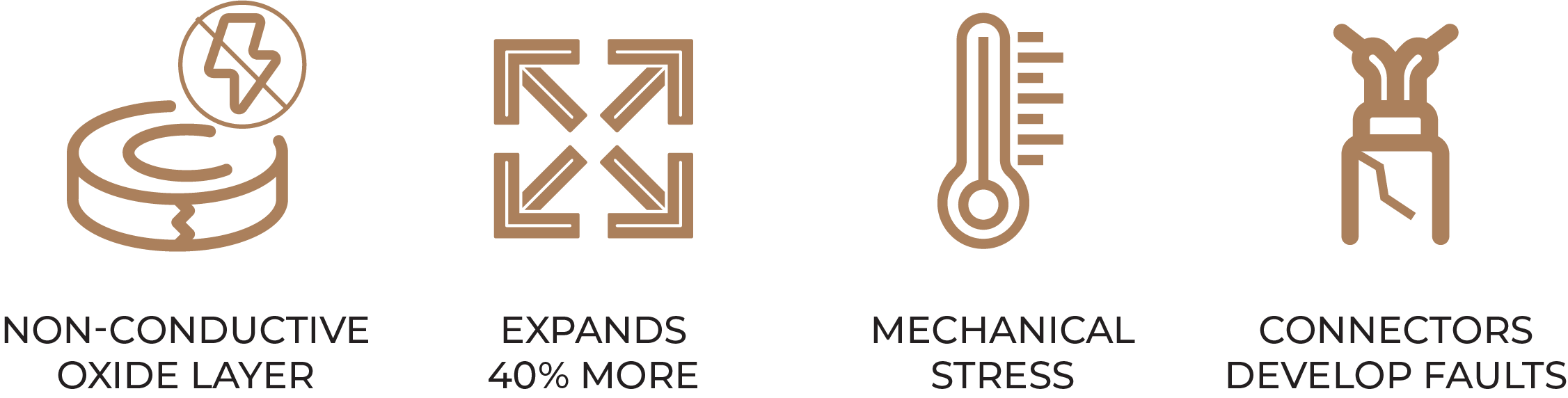
Aluminum forms a non-conductive oxide layer that can increase connection resistance if not properly managed. Additionally, aluminum expands about 40% more than copper under temperature changes, increasing mechanical stress at terminations.
Proper aluminum installations require connectors, antioxidant compounds, correct torque specifications, and require frequent inspection and maintenance to remain code compliant. Without these controls, aluminum connections can develop high-resistance faults over time.
SUBMIT A QUESTION
FACT SHEET
 The material availability is better than competitors!
I've always had great success with Service Wire. Quick quotes, quick shipping, and great product.
WHY COPPER
When reliability, performance, and long-term durability matter, conductor selection isn’t just a material choice—it’s a risk management decision. Service Wire manufactures high-performance copper wire & cable engineered to reduce installation complexity, improve connection stability, and support critical infrastructure for decades.
Copper is the preferred material for commercial branch wiring, motors, generators, transformers, and grounding systems.
Watch these quick clips to learn:
- Why copper is a superior conductor
- The four types of copper conductors
- The variety of bare copper products manufactured by Service Wire
Want to learn more? Check out Service Wire Academy!
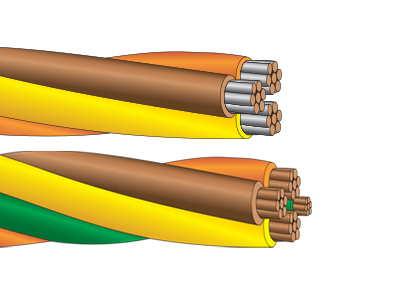
SERVICEPLEX®
Prefab Twisted Single Conductors
- XHHW-2 Inner Conductors
600/1,000 Volt Copper
AVAILABLE:
#14 AWG - 750 Kcmil
2-7 Conductors
Built-In Grounds
Pre-Installed Pulling Heads
Wide Range of Colors
Silicone-Free
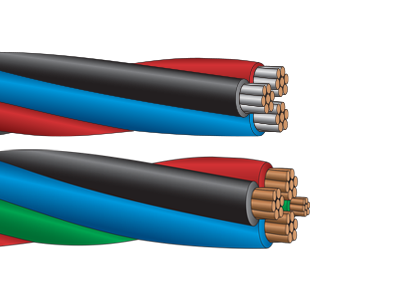
SERVICEPLEX®
Prefab Twisted Single Conductors
- RW90 Inner Conductors
600 Volt Copper
AVAILABLE:
#14 AWG - 750 Kcmil
2-7 Conductors
Built-In Grounds
Pre-Installed Pulling Heads
Wide Range of Colors
Silicone-Free
SERVICEPLEX®
Prefab Twisted Single Conductors
- USE-2 or RHW-2 Inner Conductors
600/1,000 Volt Copper
AVAILABLE:
#14 AWG - 750 Kcmil
2-7 Conductors
Built-In Grounds
Pre-Installed Pulling Heads
Wide Range of Colors
Silicone-Free
Related CUSTOMER QUESTIONS
How Can I Prevent Cable Faults During Installation?
Even the smallest nick in a cable’s insulation can lead to outer sheath damage & a short circuit fault. Cables that won’t meg properly will need to be replaced. Learn how you can prevent cable faults during installation.
THHN vs. XHHW-2: What's the Difference?
Thermoset XLPE insulation is superior to the thinner PVC insulation used in thermoplastic products (like THHN/THWN-2). Learn more about the differences between THHN and XHHW-2.
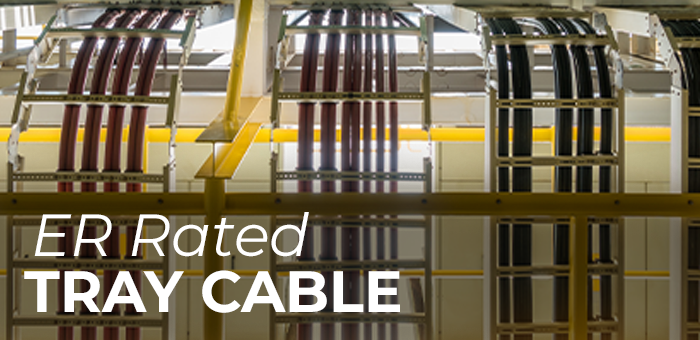
What Is Exposed Run Rated Tray Cable?
ER-rated tray cable is designed for extra durability. Learn more about the practical benefits it offers contractors.